Old cedar doesn't need to look new.
It needs someone who understands old cedar.
Cleaning, stripping, repair and preservation for siding that has already lived through decades of Missouri sun, rain, pollen, coatings and well-intentioned maintenance.
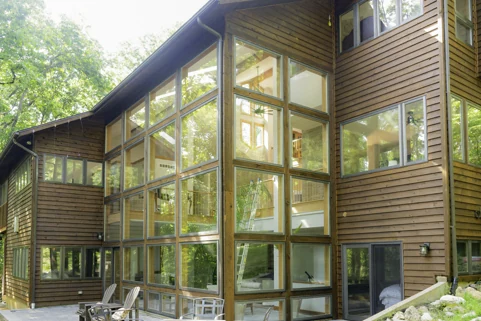
The goal isn't to erase forty years. It's to give the wood more good years.
Cedar is remarkably forgiving when it is maintained, but restoration is not time travel. Some boards can be cleaned and preserved. Some need a little repair. Some have simply reached the end of the road. Experience is knowing the difference—and knowing when doing more would actually do harm.
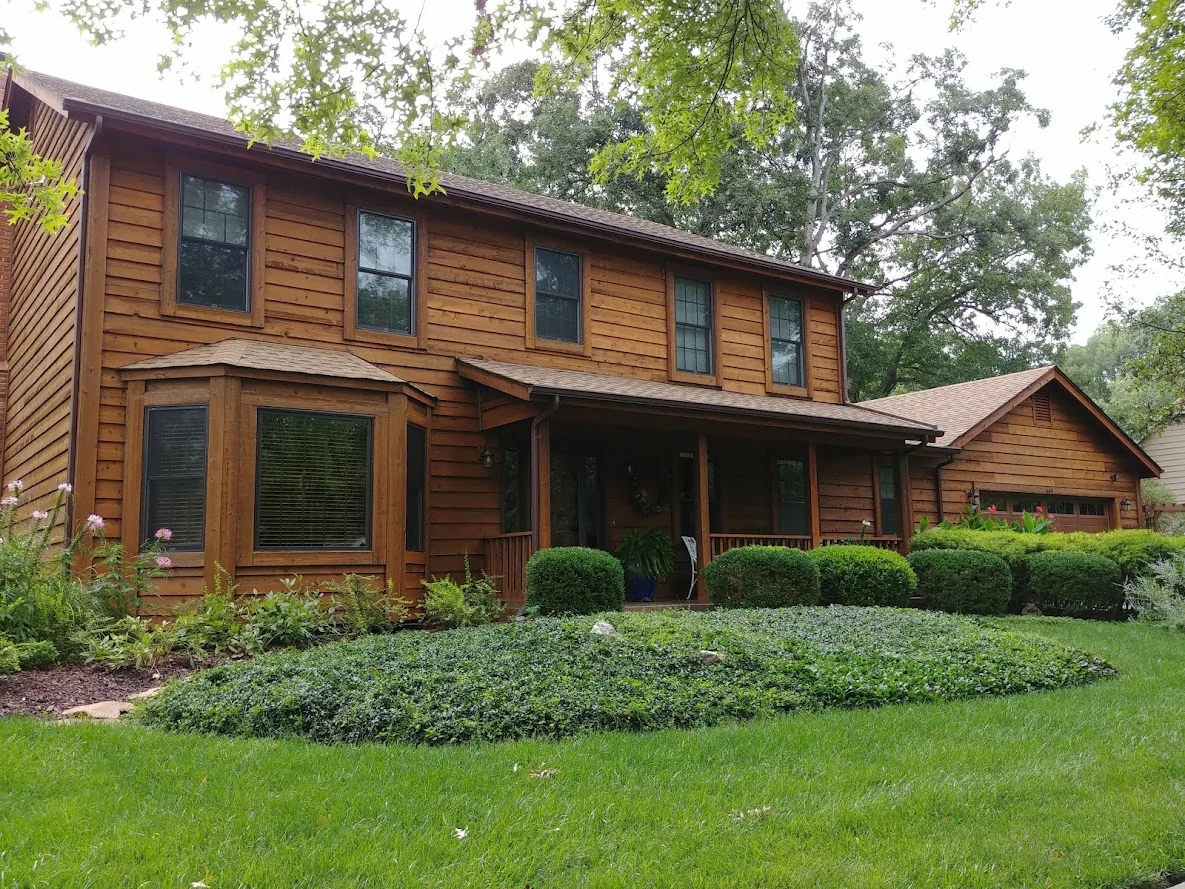
A house can change without pretending the wood is brand new.
Same cedar home, different point in its maintenance life. Restoration should bring the siding back into balance while keeping the character that belongs to real wood.
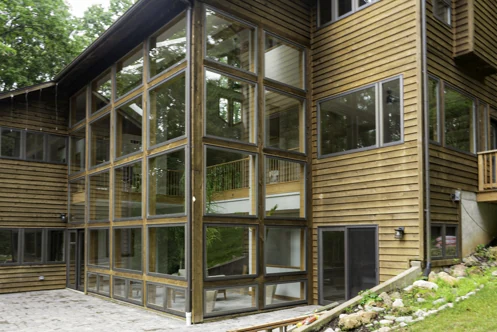
Same species. Different siding. Different behavior.
Wide lap siding, narrower boards, vertical installations and tongue-and-groove all age differently. Grain orientation matters too. Horizontal grain tends to hold more pollen and moisture; vertical grain often stays cleaner longer.
That is why the first question isn't “How much pressure?” It is: what am I actually looking at?
WHY does cedar weather differently by grain and orientation? →
Tongue-and-groove detail story · finished photo to be added when the project gives us one worth showing.
Power washing wood isn't about power.
The chemistry does the cleaning. The pressure washer replaces much of the scrubbing and makes the rinse faster.
The cleaners and strippers used here can do their work with a scrub brush and garden hose. On cedar, the washer is used as a controlled tool—not as a carving machine. More pressure is not more clean.
Old cedar has softer spring-growth fibers between harder grain. Once those soft fibers are gone, no cleaner, sealer or pressure washer can put them back.
If the wood starts looking like a 200-year-old cowboy, the problem isn't dirt anymore.
Perfectly stripped can be the wrong goal.
Old coatings do not always surrender evenly. Repeatedly applying stripper just to chase every last dark patch can weaken already-weathered soft fibers. Sometimes the better restoration decision is to stop.
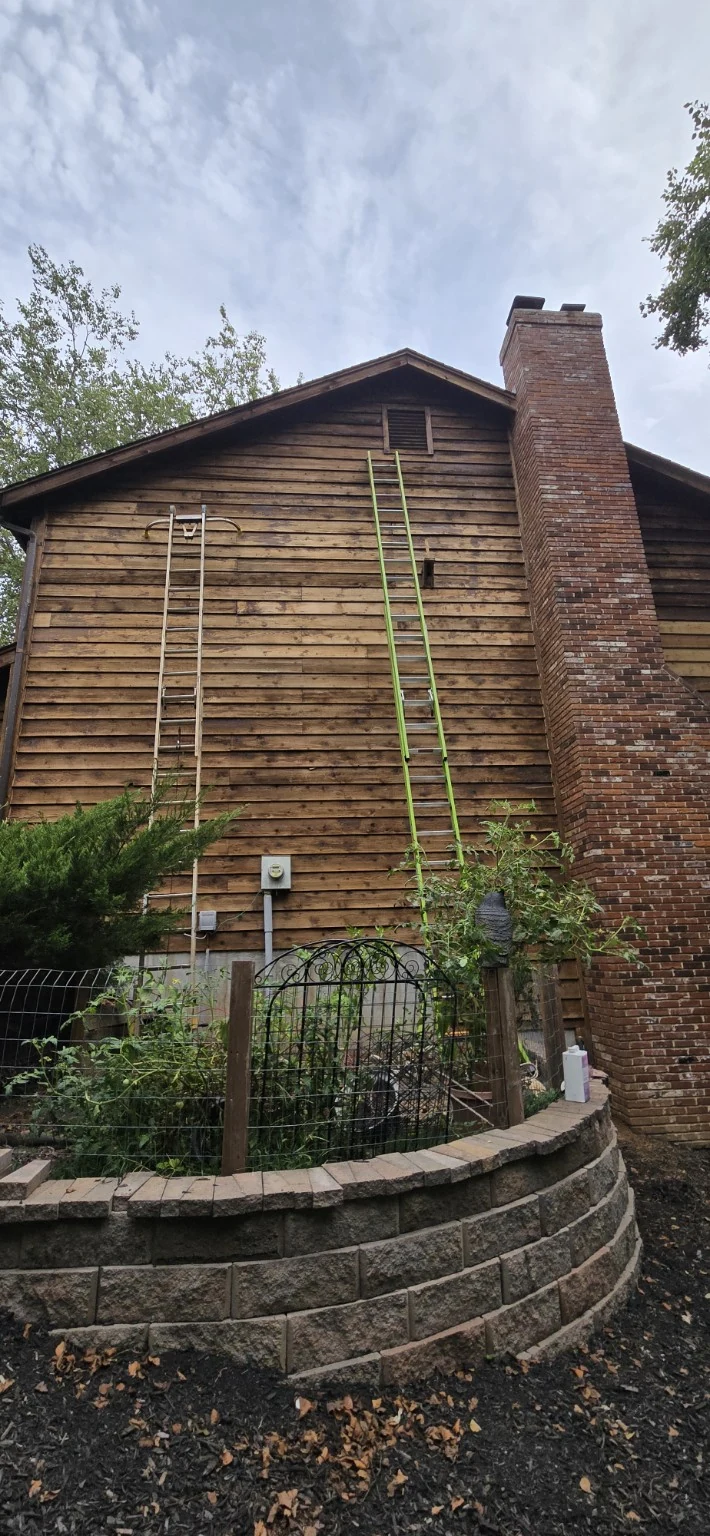
Leave some history. Save some wood.
Larger remnants that would interfere with penetration can be lightly sanded. The objective is to open the surface enough for oil, not sand decades off the house.
Once penetrating oil gets back into the exposed cedar—and works behind remnants of the previous finish—the next maintenance cycle can often remove more without abusing the wood today.
Make the wood healthier every time we work on it.
Sometimes the expensive part is making old dimensions exist again.
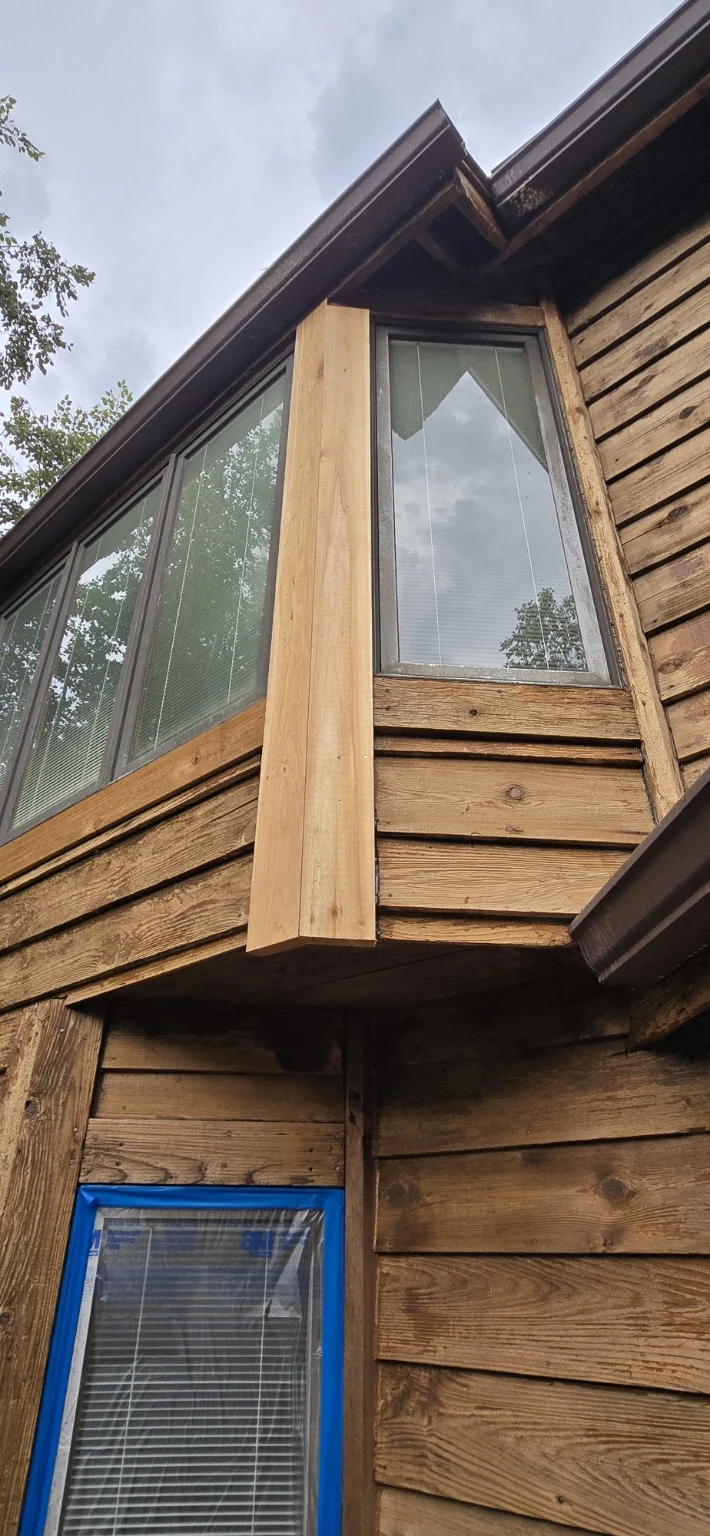
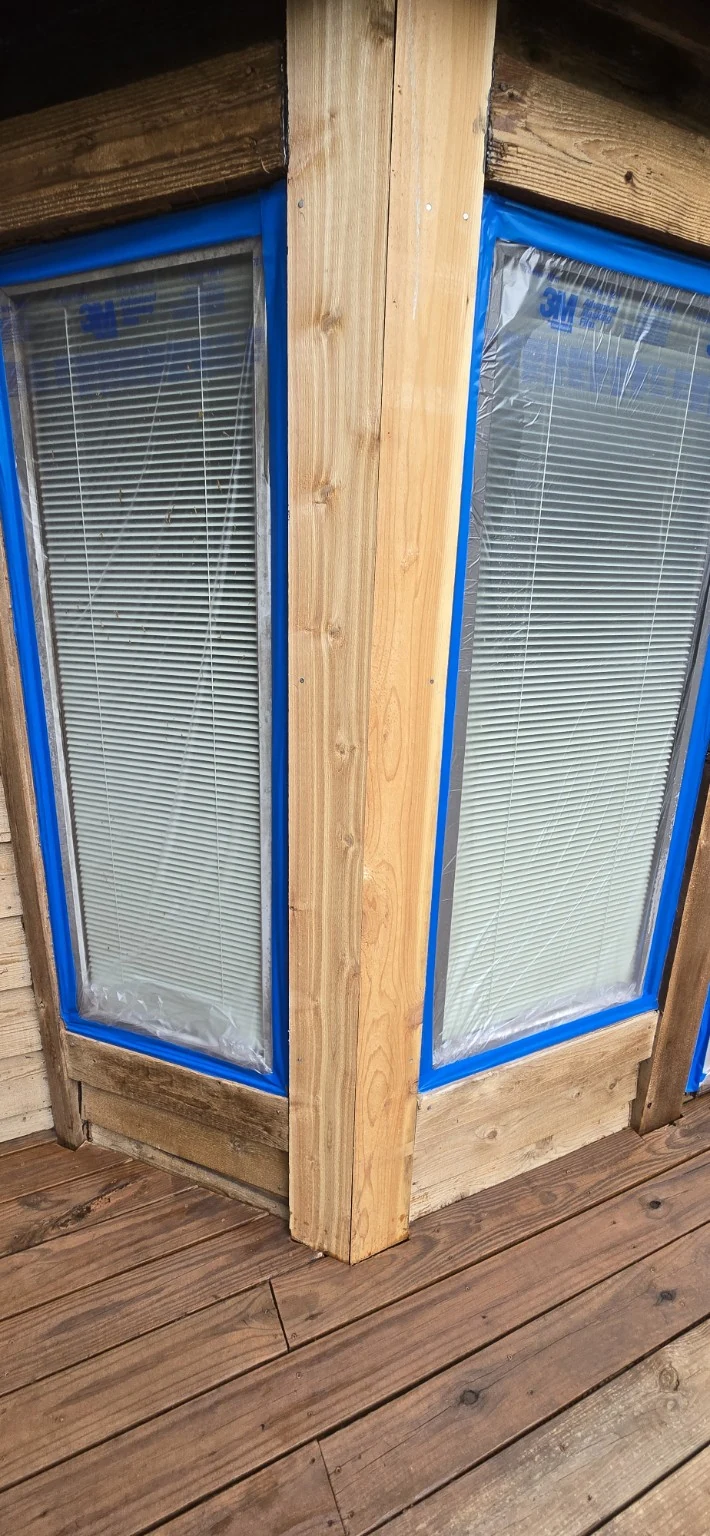
This current cedar home needed new rough-sawn material around its bay windows. The original corner boards were built from dimensions that today's lumberyard no longer hands you as a matching piece.
So larger cedar gets bought and ripped down to reproduce the size the house was built with. Yes, that means paying for expensive cedar and turning part of it into sawdust. Old houses have never been particularly interested in modern lumber standards.
Sometimes the best work gets harder to find.
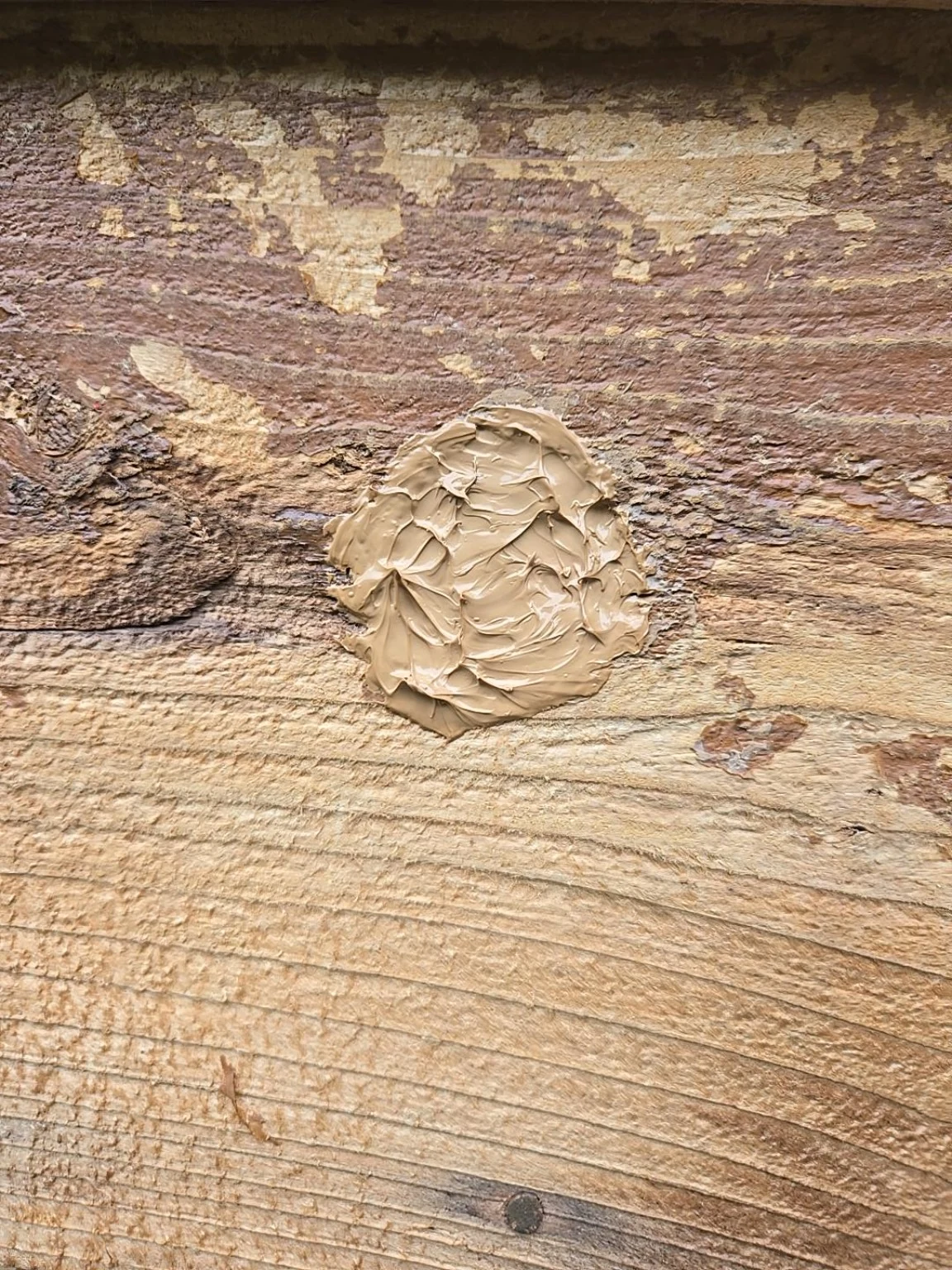
Small damage does not automatically justify replacing an entire board. A previous woodpecker repair on this house had shrunk below the surface. It was refilled and textured so the repair follows the rough character of the surrounding cedar instead of leaving a smooth blob on the wall.
Fresh finish can temporarily make a repair easier to see. As the oil settles and the cedar lightens, the goal is for your eye to go back to seeing the house.
Day one is not the final color.
Very dry cedar can drink a surprising amount of penetrating oil. Freshly treated wood may look considerably darker and glossier than it will after the finish has had time to penetrate and cure.
That change does not happen overnight. On the old, dry houses we commonly work on, the appearance can continue settling for weeks. A photograph taken immediately after application is a progress photograph—not a promise of the final color.
What matters more than the first-day photograph: getting preservative into wood that needs it, watching for areas that continue to absorb, and maintaining the siding before deterioration turns into replacement.
Sometimes cedar is only part of the picture.
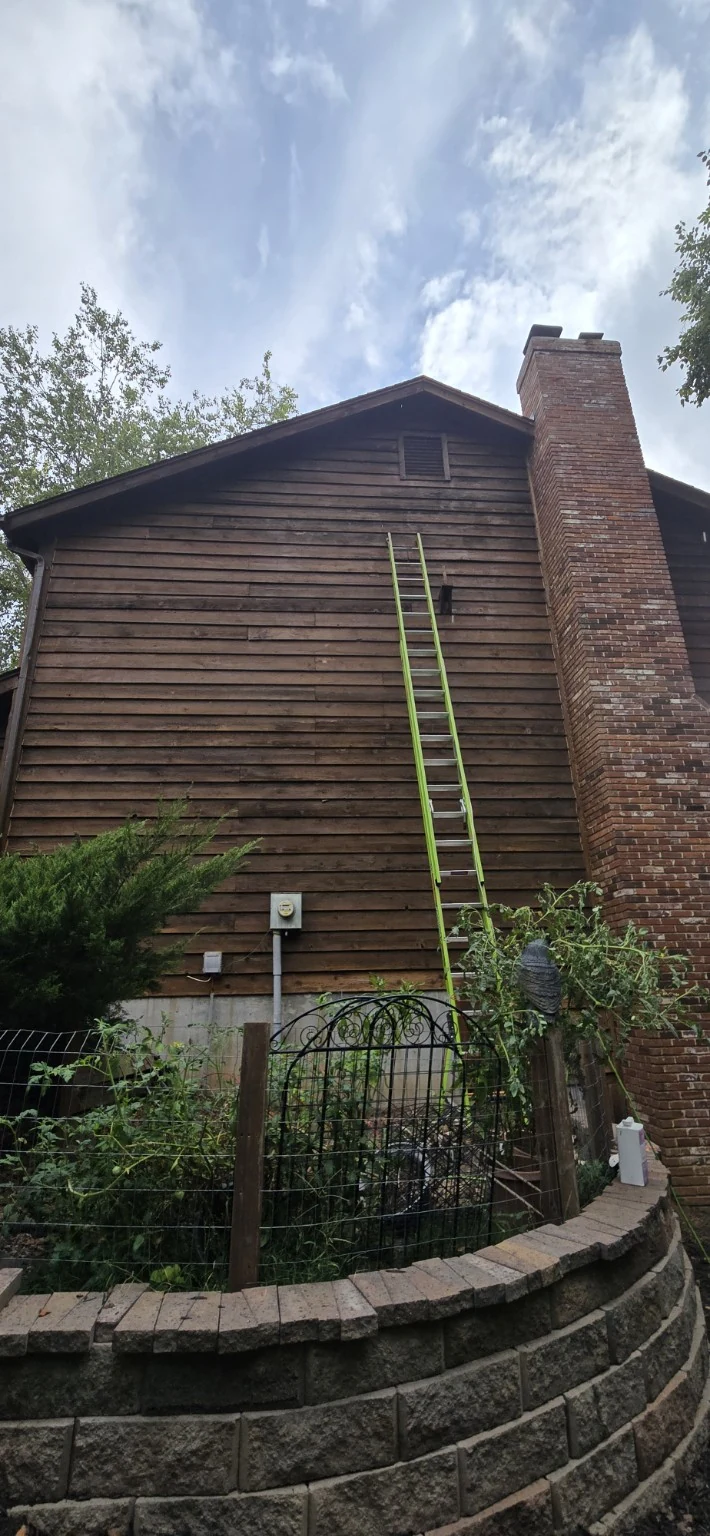
Stone, glass, rooflines and shade can dominate the first impression of a house like this. The cedar still matters—it just tells a quieter story than a wall filled edge-to-edge with wood.
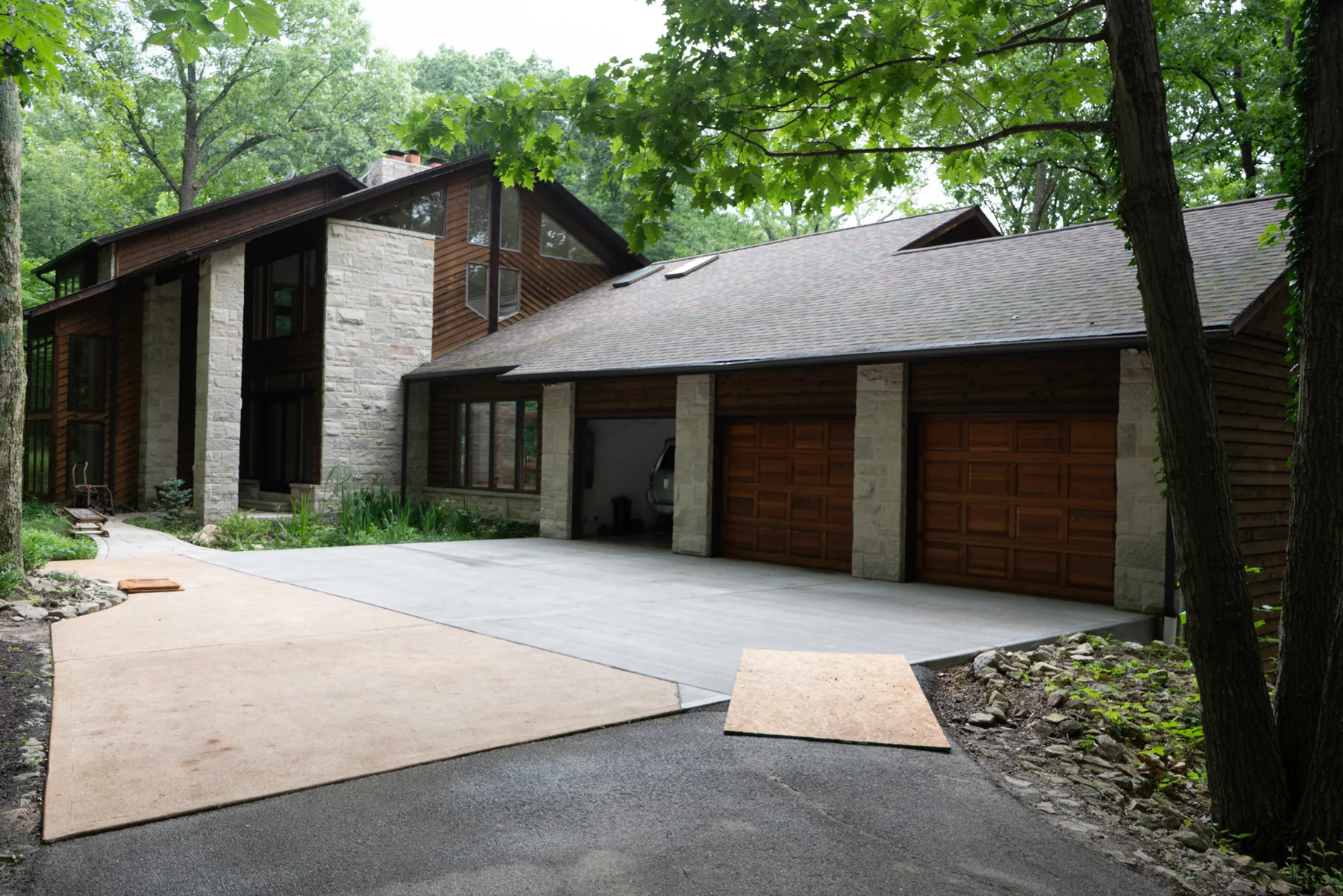
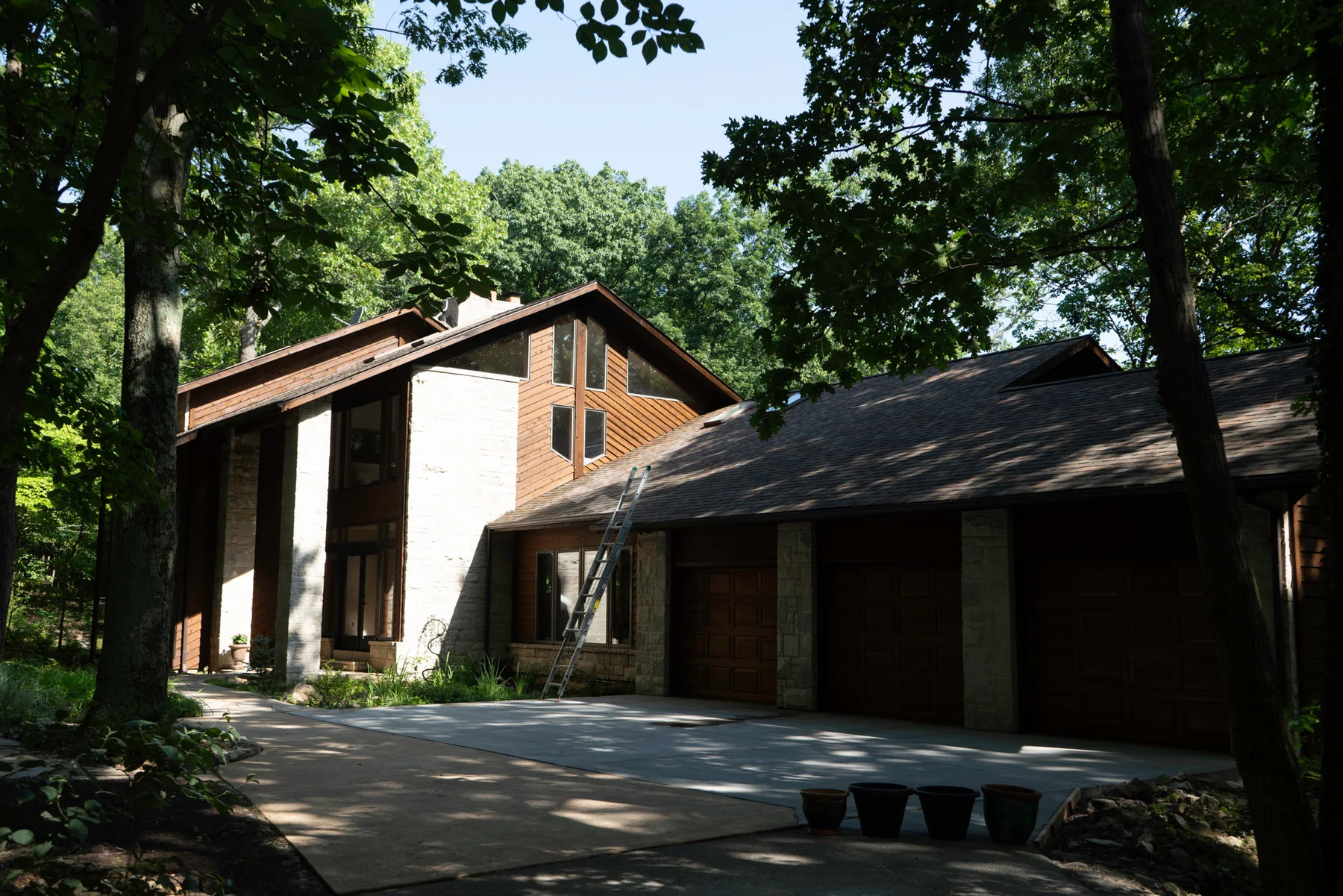
Sometimes new wood should look a little older.
Fresh cedar can stand out sharply beside an established house. When the goal is a closer match, the color can be moved before the finish ever goes on. The garage project gives us the full progression: washed cedar, darkened cedar, then freshly finished wood.
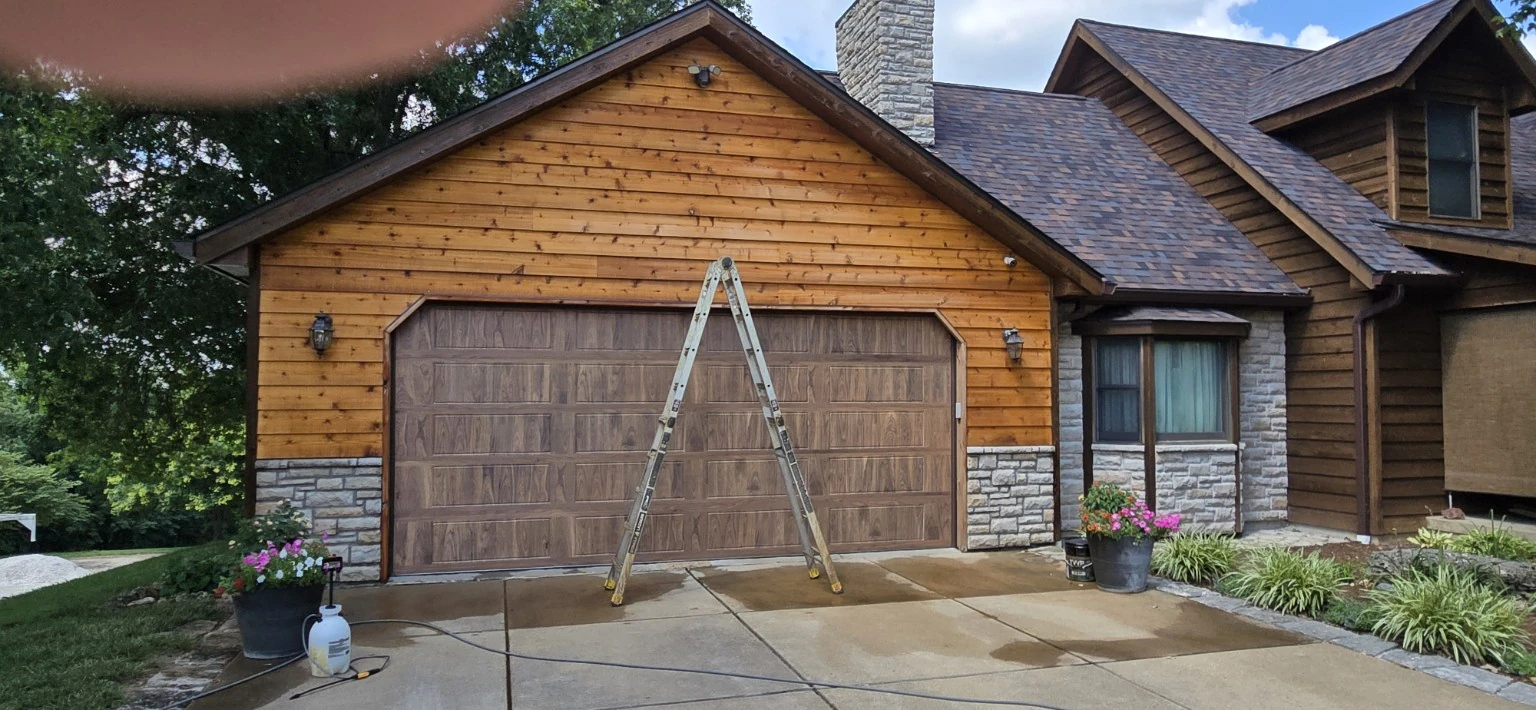
Clean wood gives us the honest starting color.
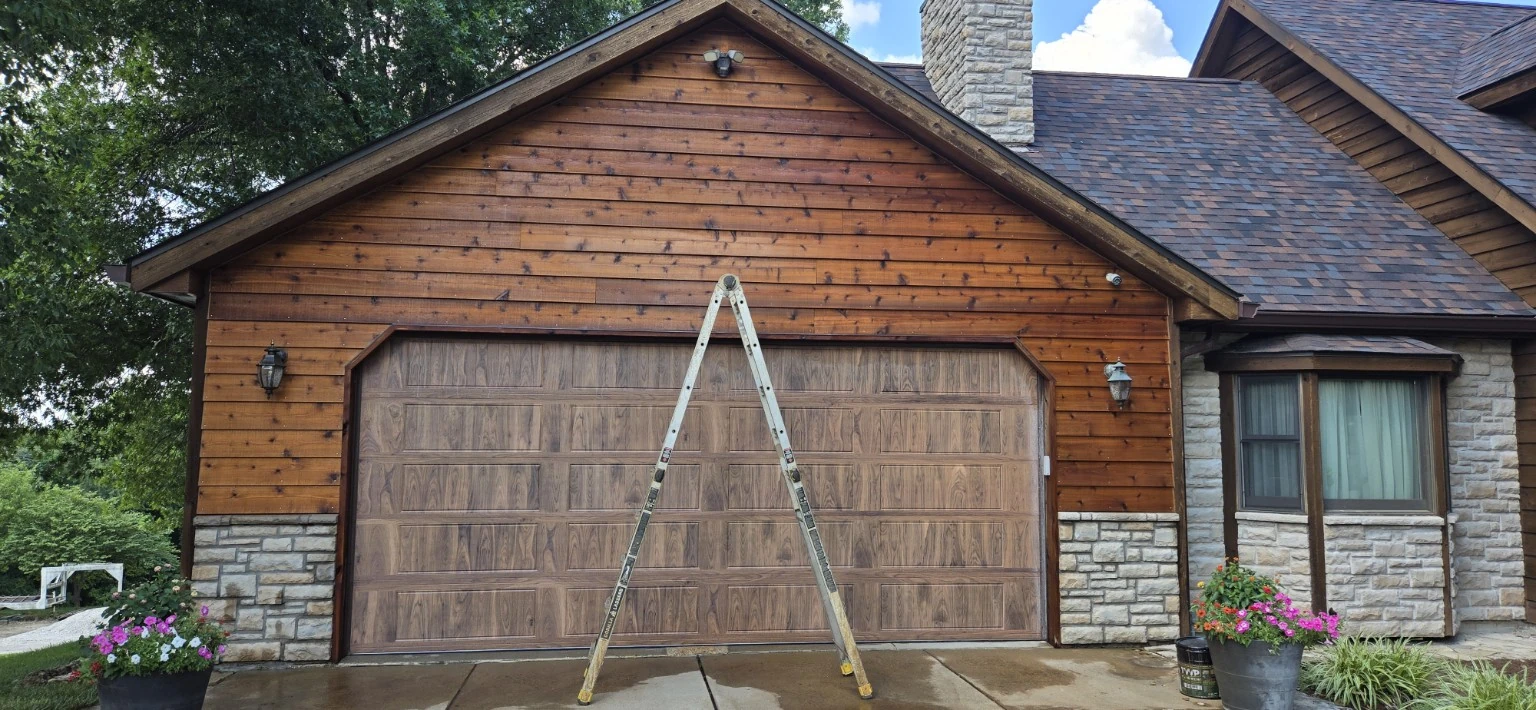
A controlled tannin reaction can take the bright-new edge off cedar when matching is the goal.
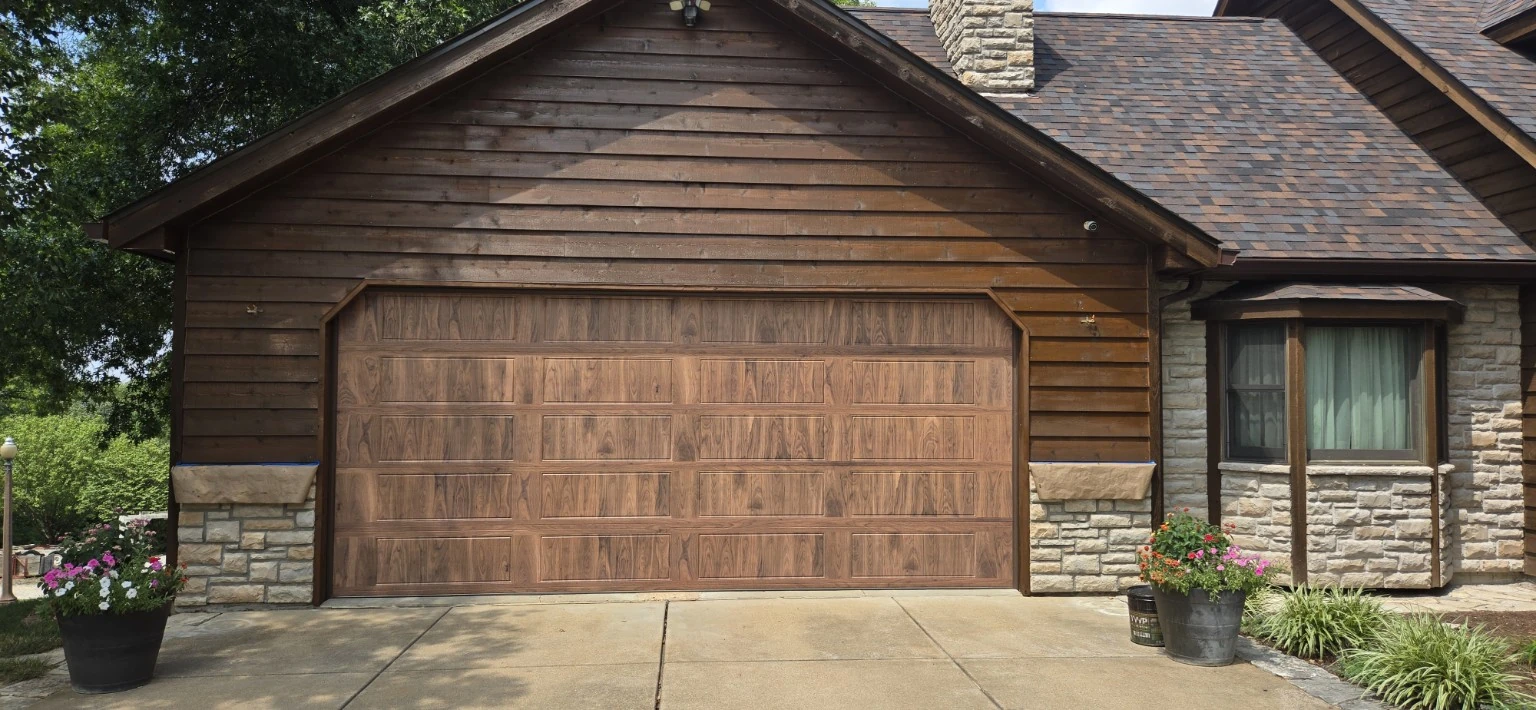
Penetrating oil deepens everything again. Then time and curing bring the appearance back toward its settled color.
Same garage, three stages. The finished color will continue to settle as the penetrating oil cures.
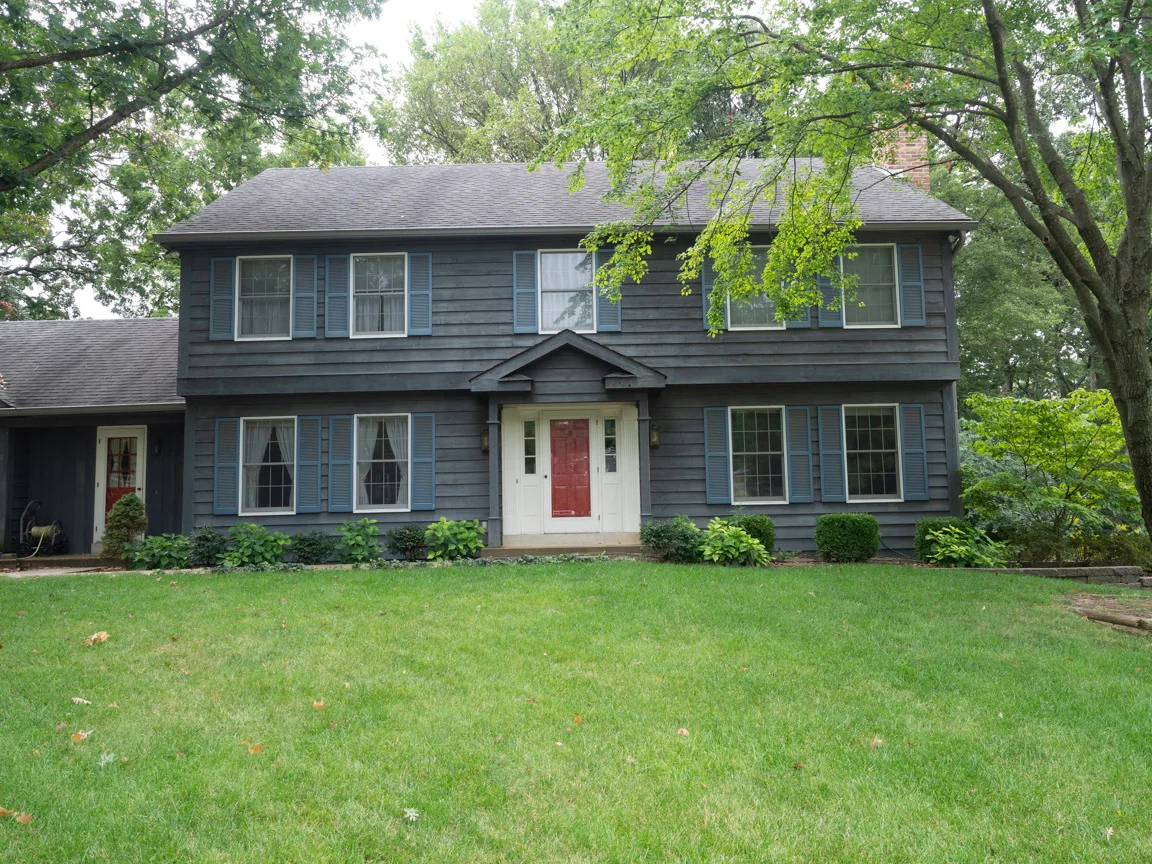
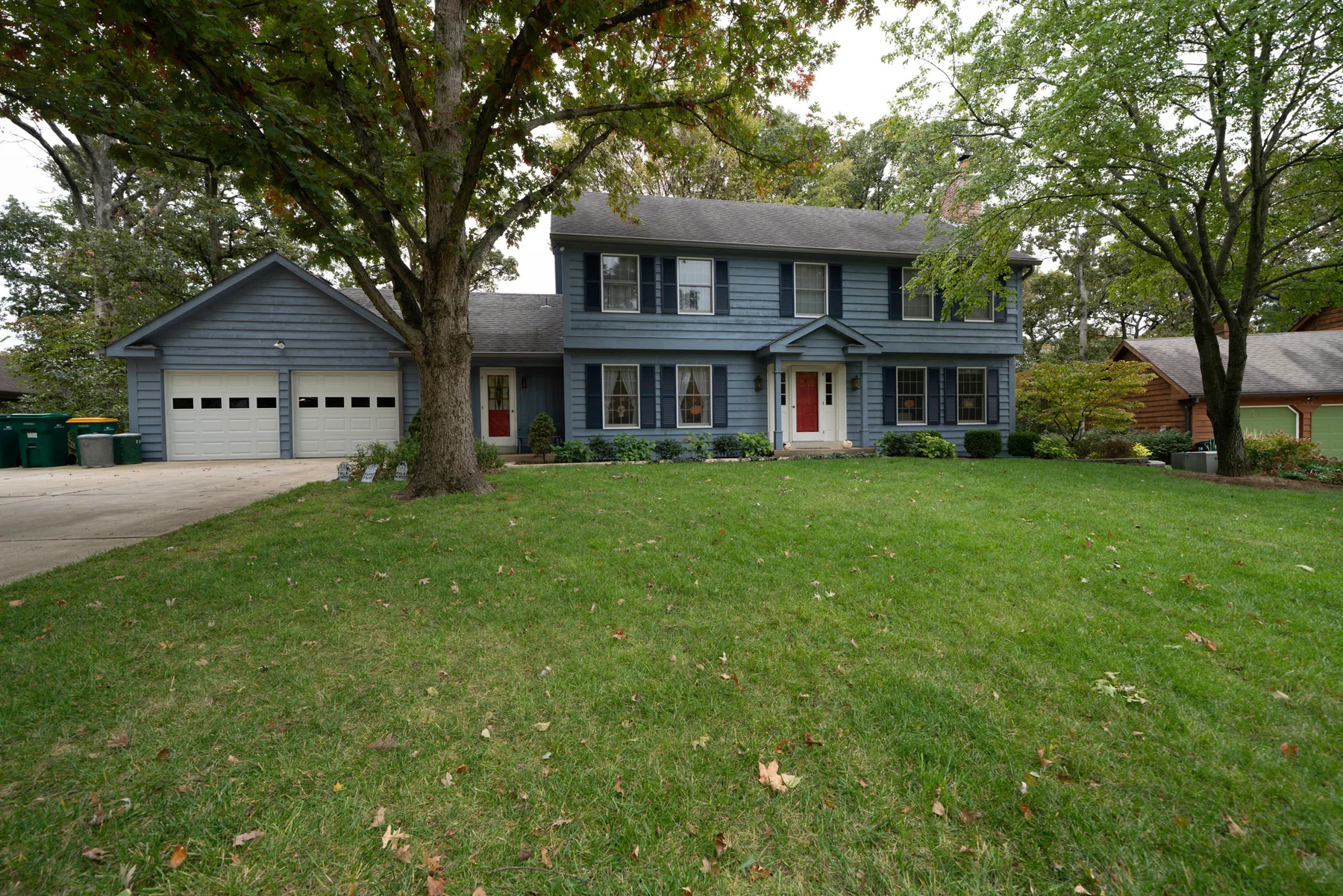
What if the siding already has a solid-color finish?
Some cedar homes have been maintained for years with opaque or solid-color coatings. At that point, the right plan starts with what is already on the house—not with an arbitrary promise to make every board look natural again.
Existing finish, wood condition, adhesion and the homeowner's goals all matter. Sometimes preserving a sound solid-color system makes more sense than forcing an old house into a natural-wood look it has not had in years.
Cedar restoration is not one finish, one color or one recipe. It is choosing the next step that makes sense for the cedar you actually have.
This story doesn't have its last photograph yet.
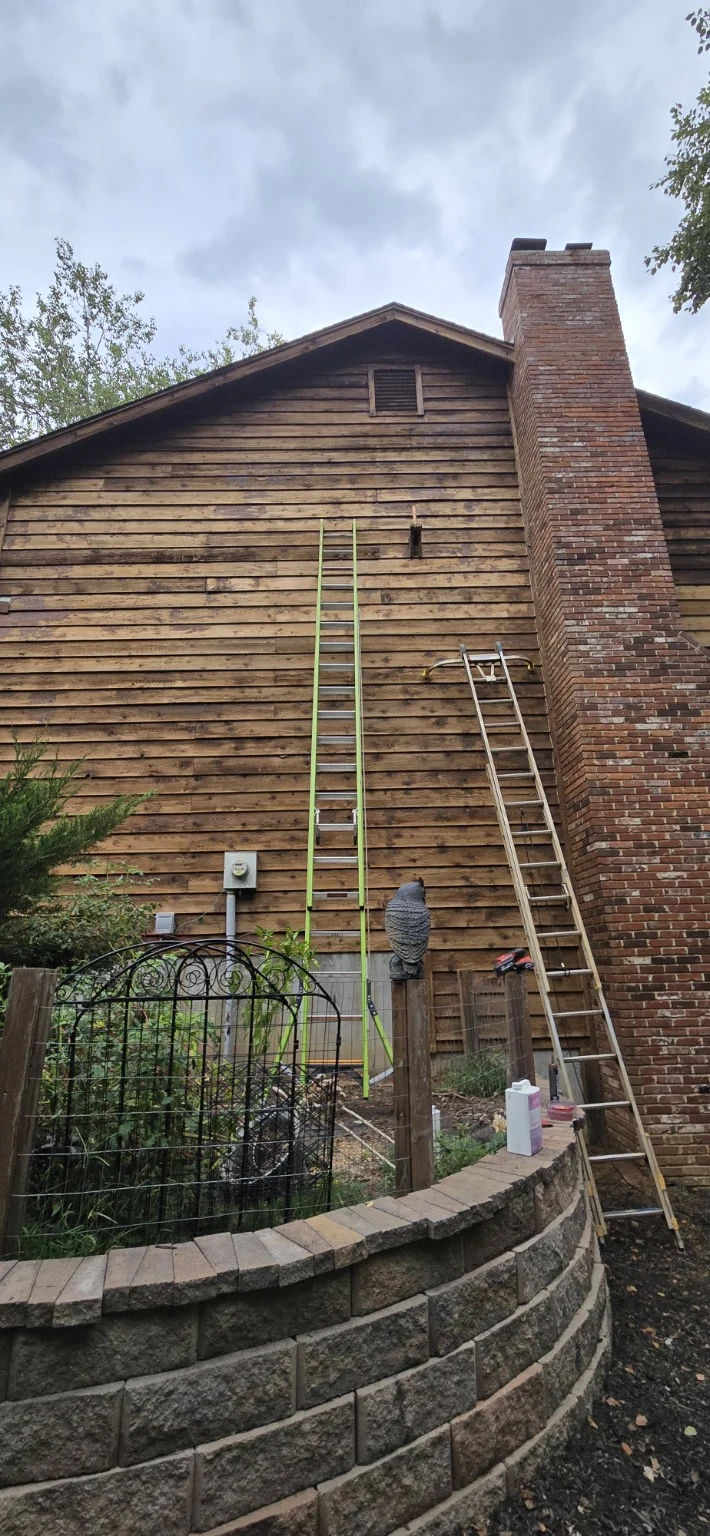
We have the before condition, stripping, selective sanding, new cedar fabrication, small repairs and fresh preservative. What we do not have is the photograph that matters most: the house after the finish has had time to settle.
So we're not going to fake one.
Build now. Curate forever.
Your cedar doesn't need a sales pitch. It needs a good decision.
Tell Brett what is on the house, what you know about its history, and what you want to accomplish. If photographs help, text them.