Keep the deck.
Preserve the wood.
A good deck restoration is not about making old wood look temporarily new. It is about keeping sound wood sound.
Careful cleaning, appropriate repairs, enough dry time and a penetrating finish all matter. So does knowing when to leave good wood alone.
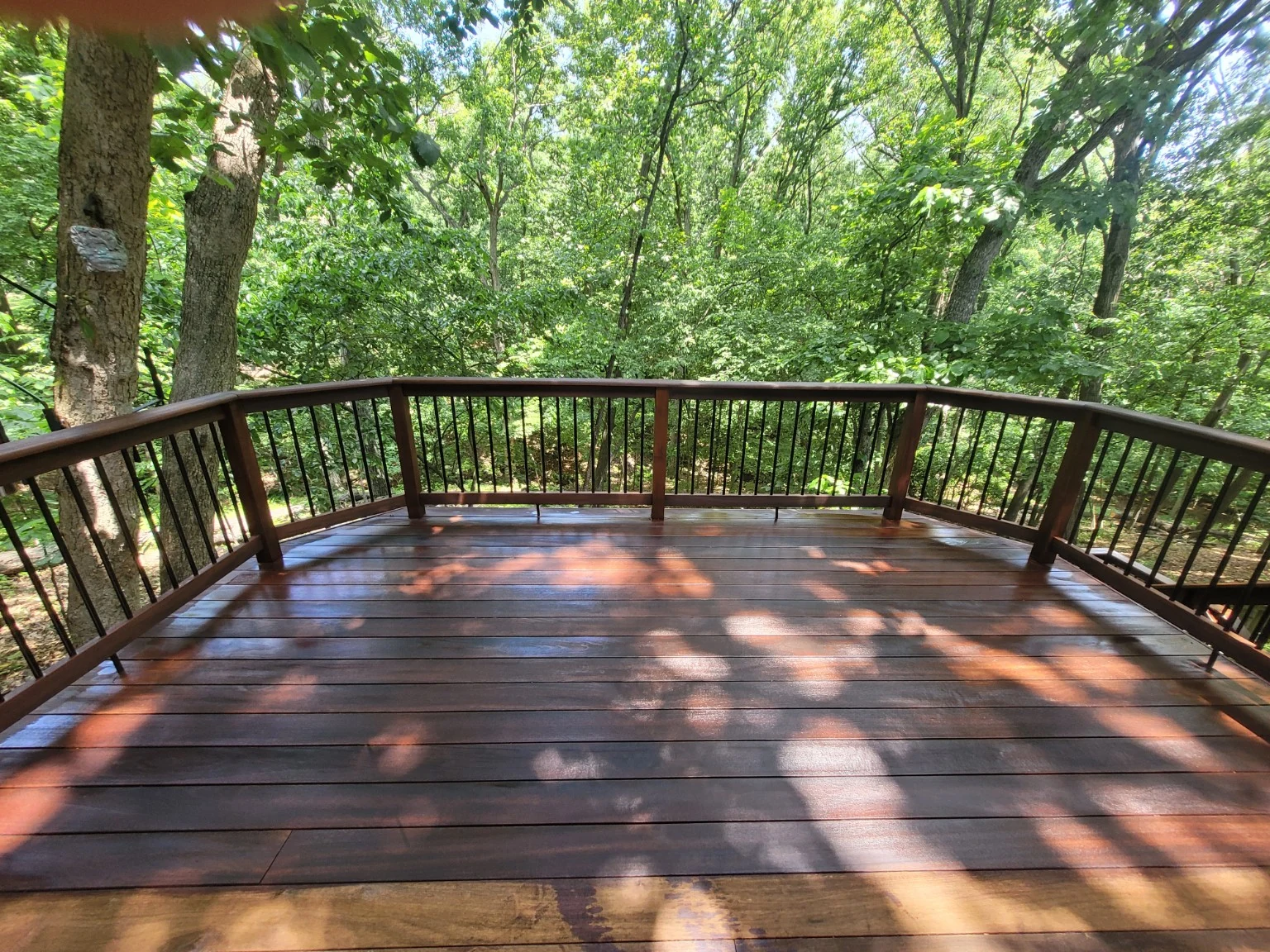
Weathered does not automatically mean worn out.
A deck doesn't usually fail because it got wet once. Sun and weather break down the protection first; exposed wood then begins absorbing and holding more moisture. If the structure and most of the wood are still sound, cleaning, selective repair and the right finish can add years of useful life.
Fifteen-year-old Tigerwood. Never stained.
This is why we don't judge exterior wood by age alone. Properly maintained hardwood can remain remarkably serviceable for years.
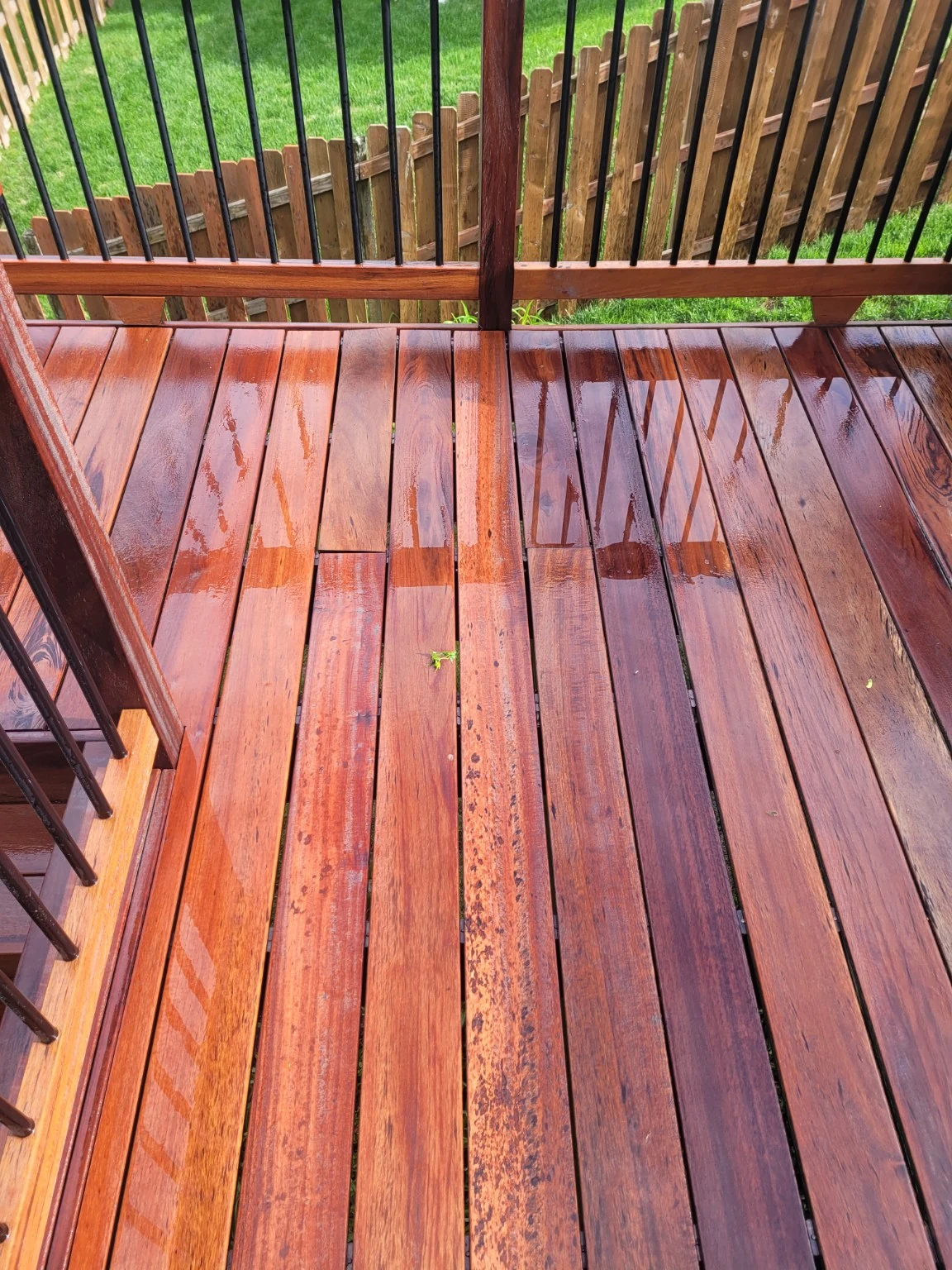
Cleaning without carving up the surface.
Power washing is part of the process, but pressure is not the goal. Lower pressure, proper distance and continuous passes matter. Too much pressure can cut the wood, raise the grain or leave start-and-stop lines that become painfully obvious after the finish goes on.
The objective is clean wood—not proof that the pressure washer works.
Dry wood first. Oil second.
After cleaning, the wood normally needs about 24–48 hours of appropriate drying weather before an oil-based preservative is applied. The goal is simple: let the wood be dry enough to absorb the oil instead of trapping excess moisture underneath it.
Horizontal surfaces typically need attention around every 2–3 years; vertical rails can often go 4–6. A simple whole-deck cycle around every three years works well for many customers.
WHY do deck floors need attention sooner than railings? →
WHY isn't there one maintenance schedule for every piece of wood? →
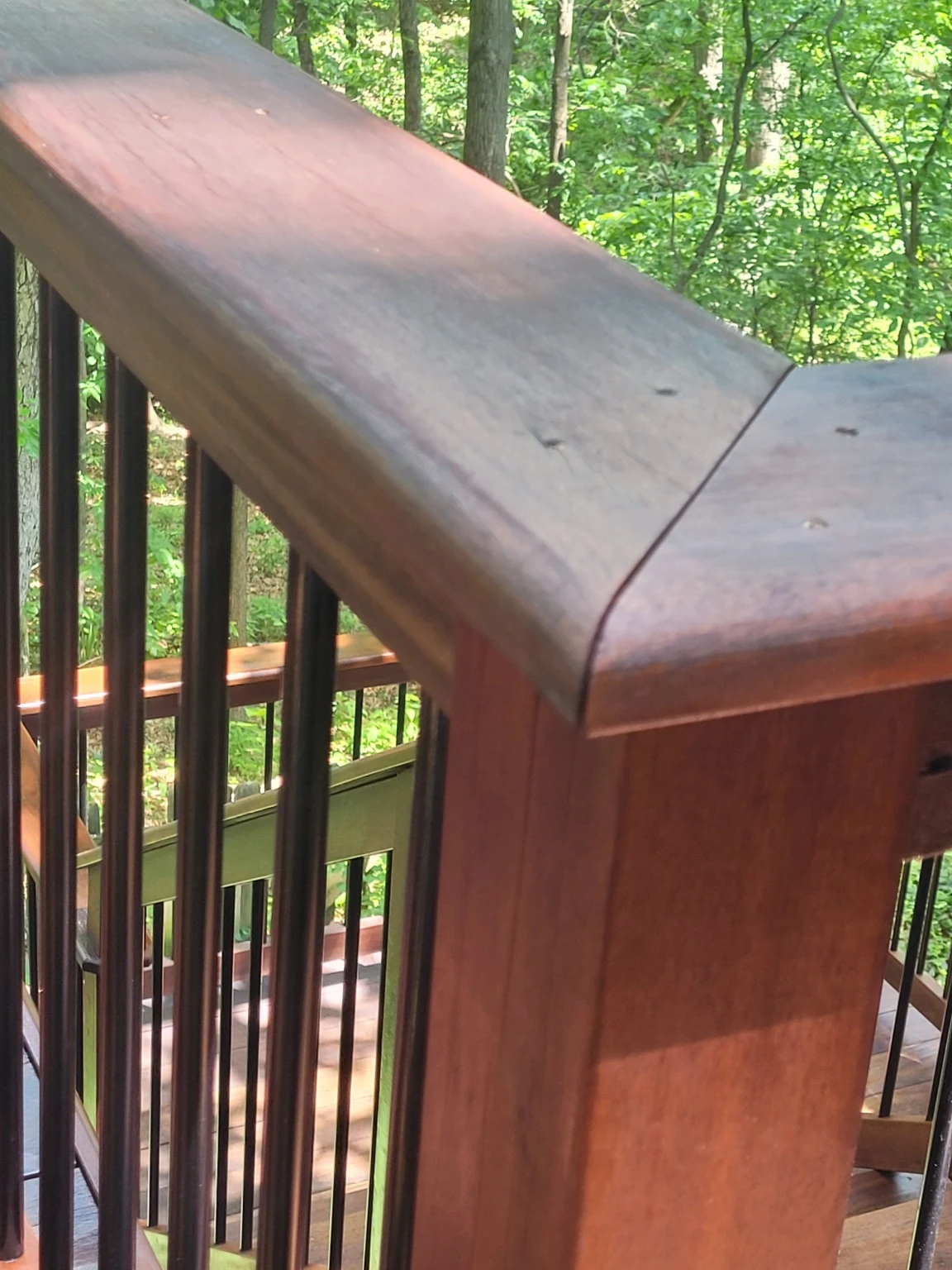
Ipe deserves the right approach.
Dense hardwoods reward careful preparation and a finish intended to penetrate rather than sit on top.
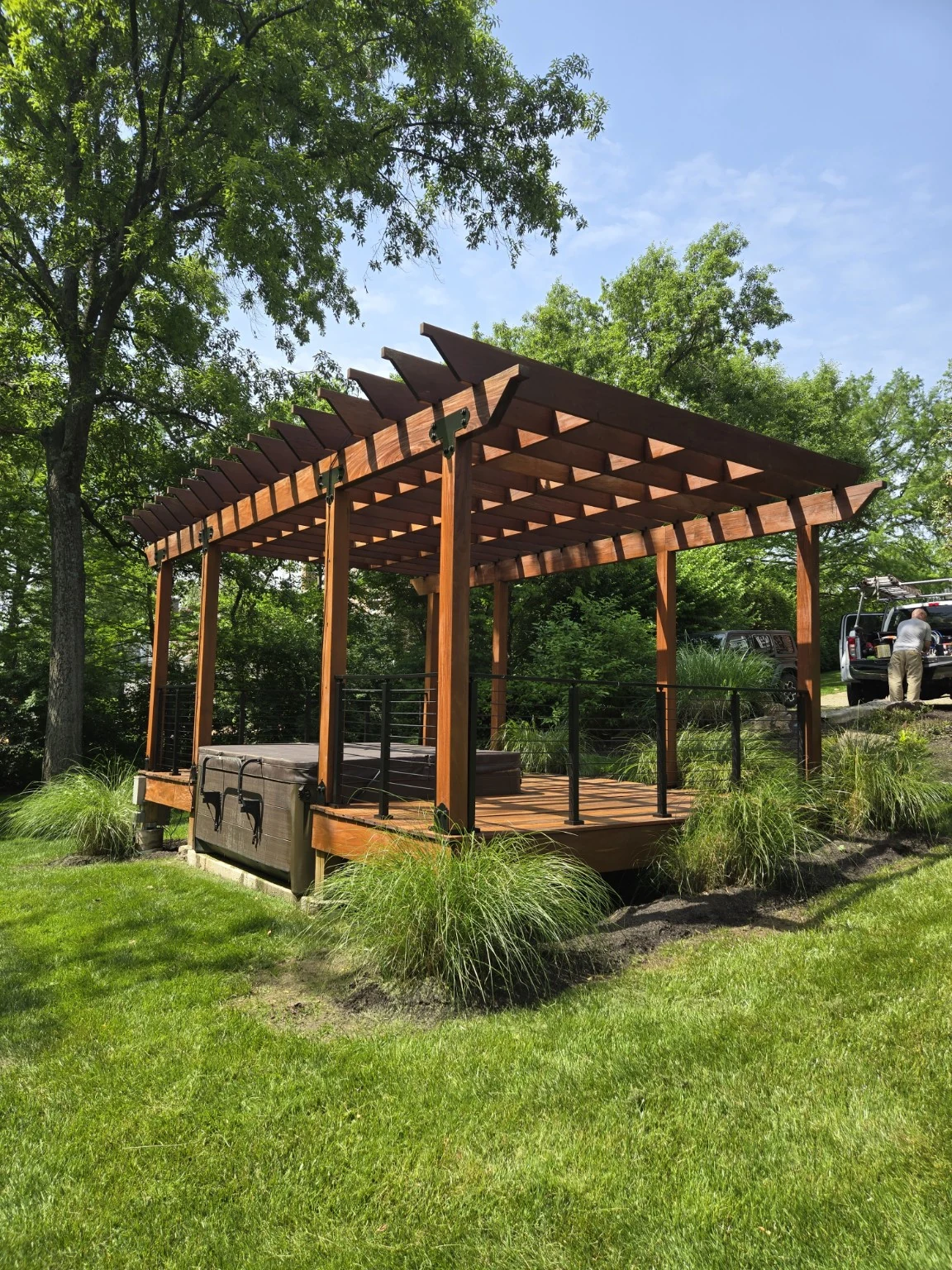
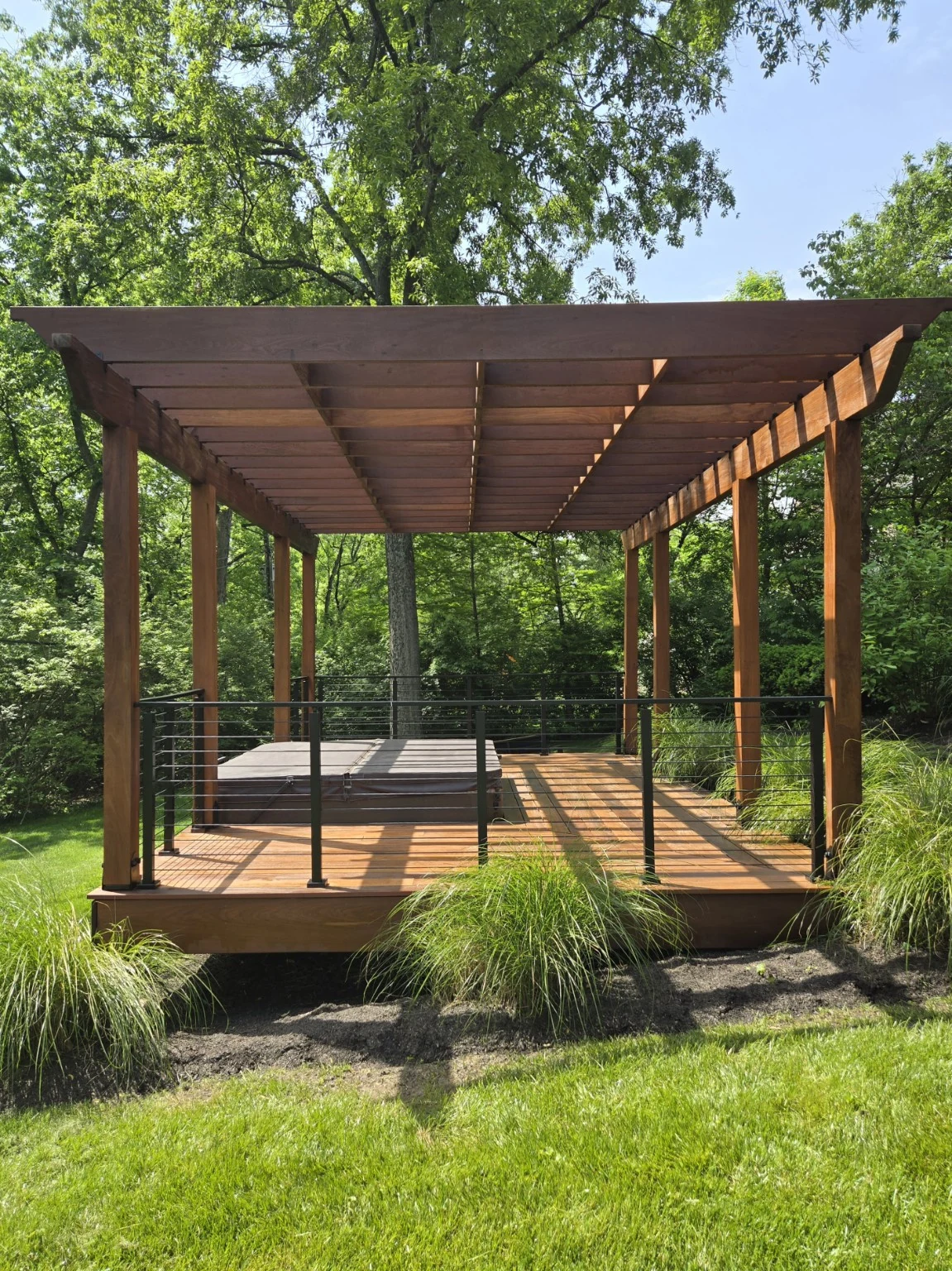
Repair what failed. Keep what didn't.
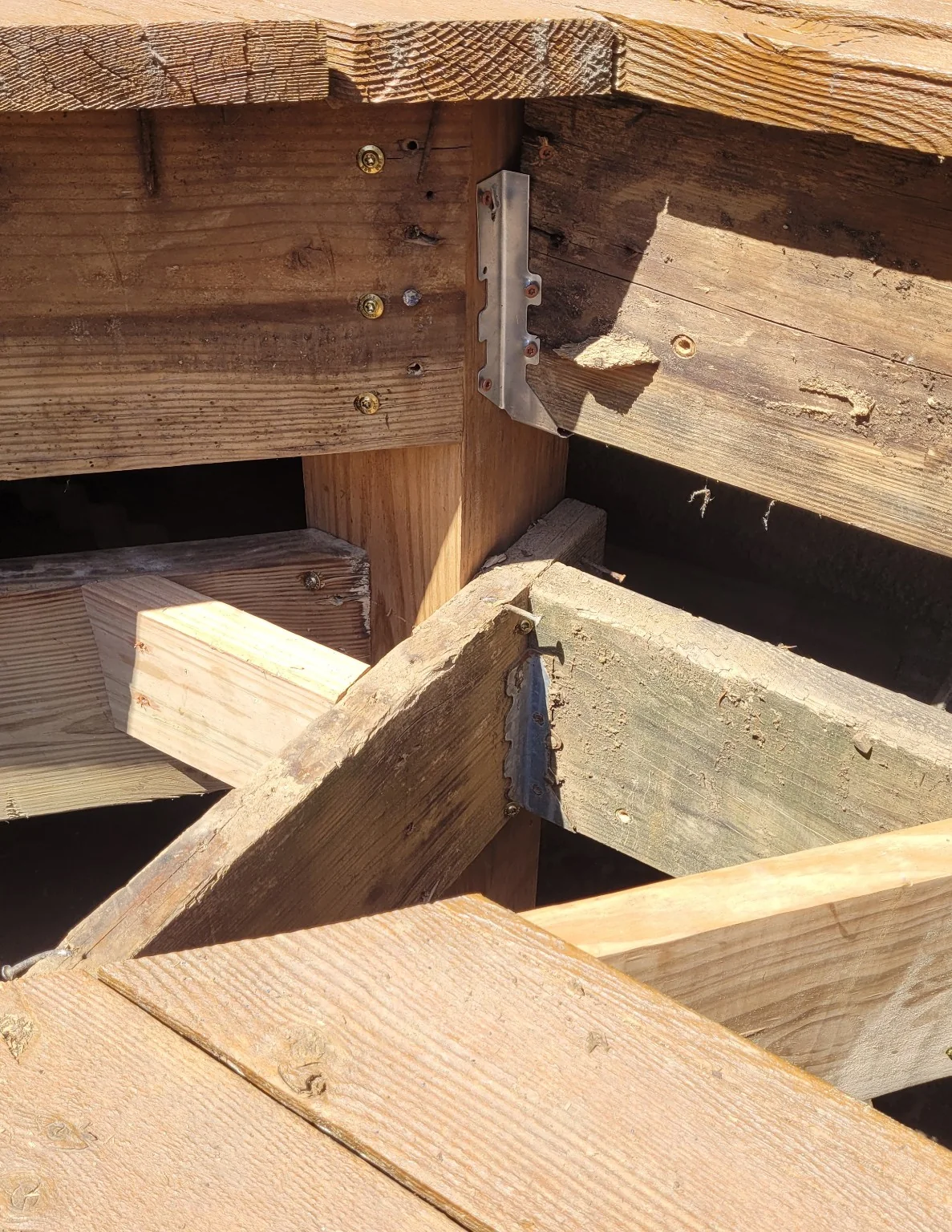
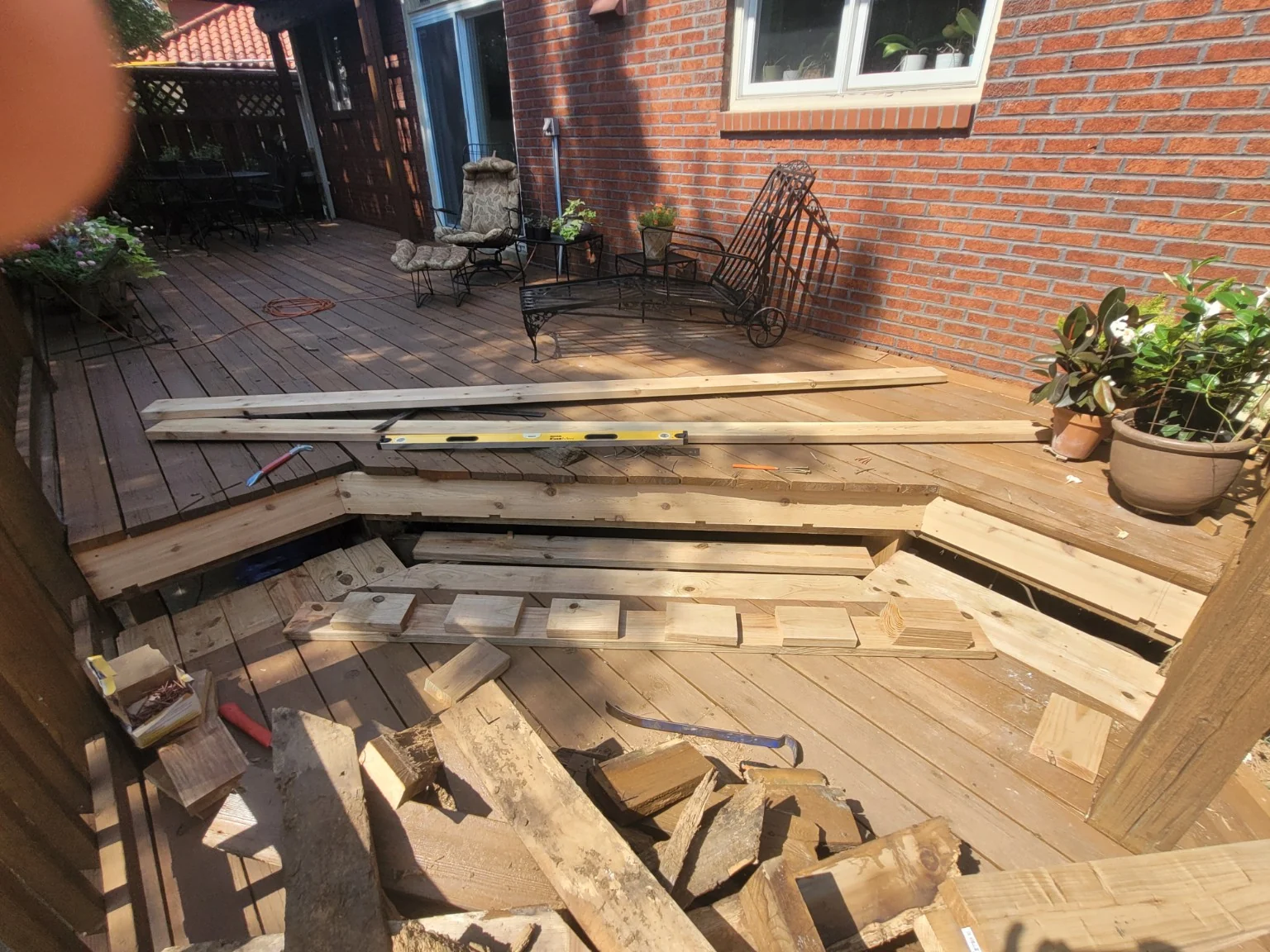
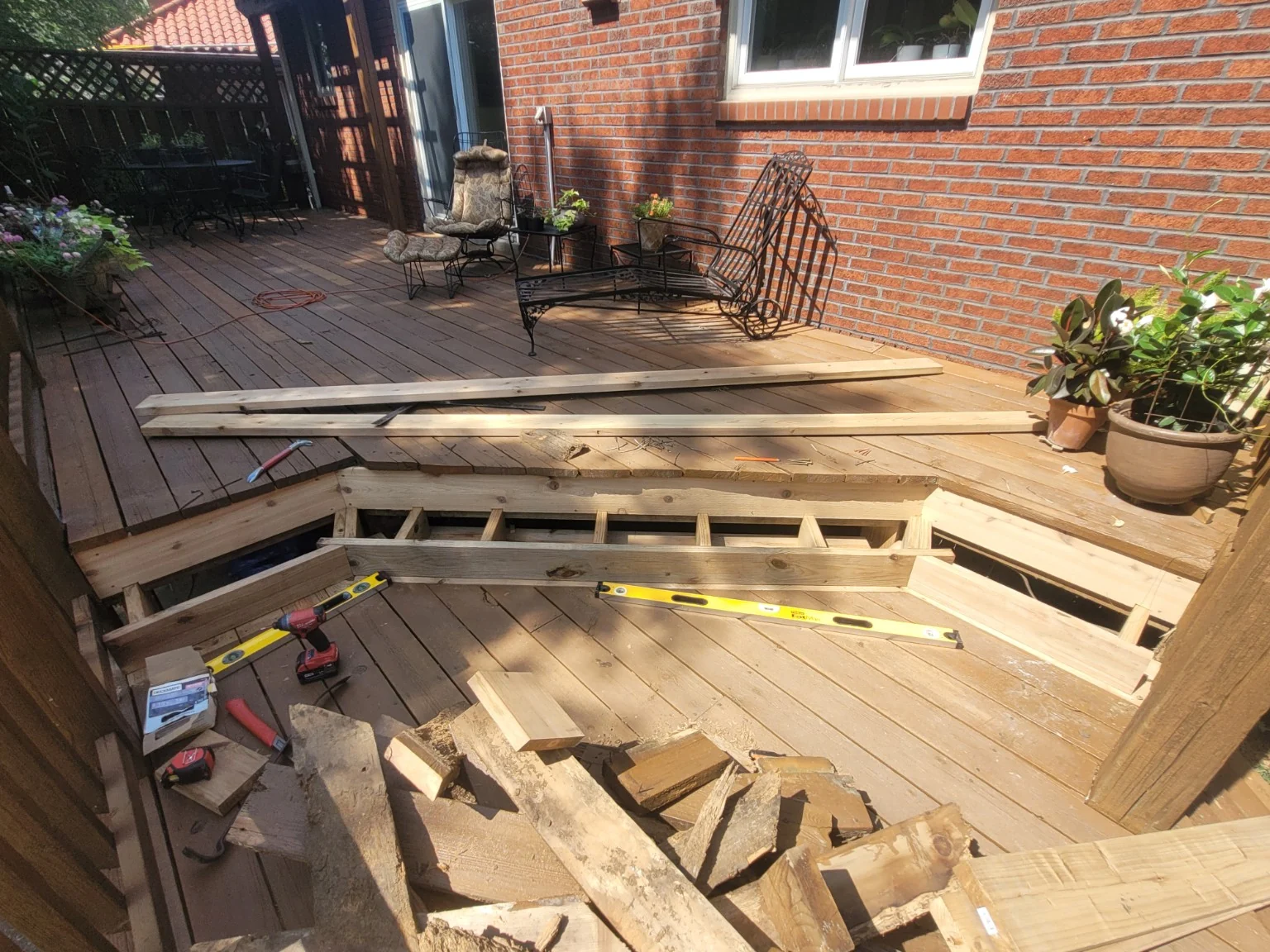
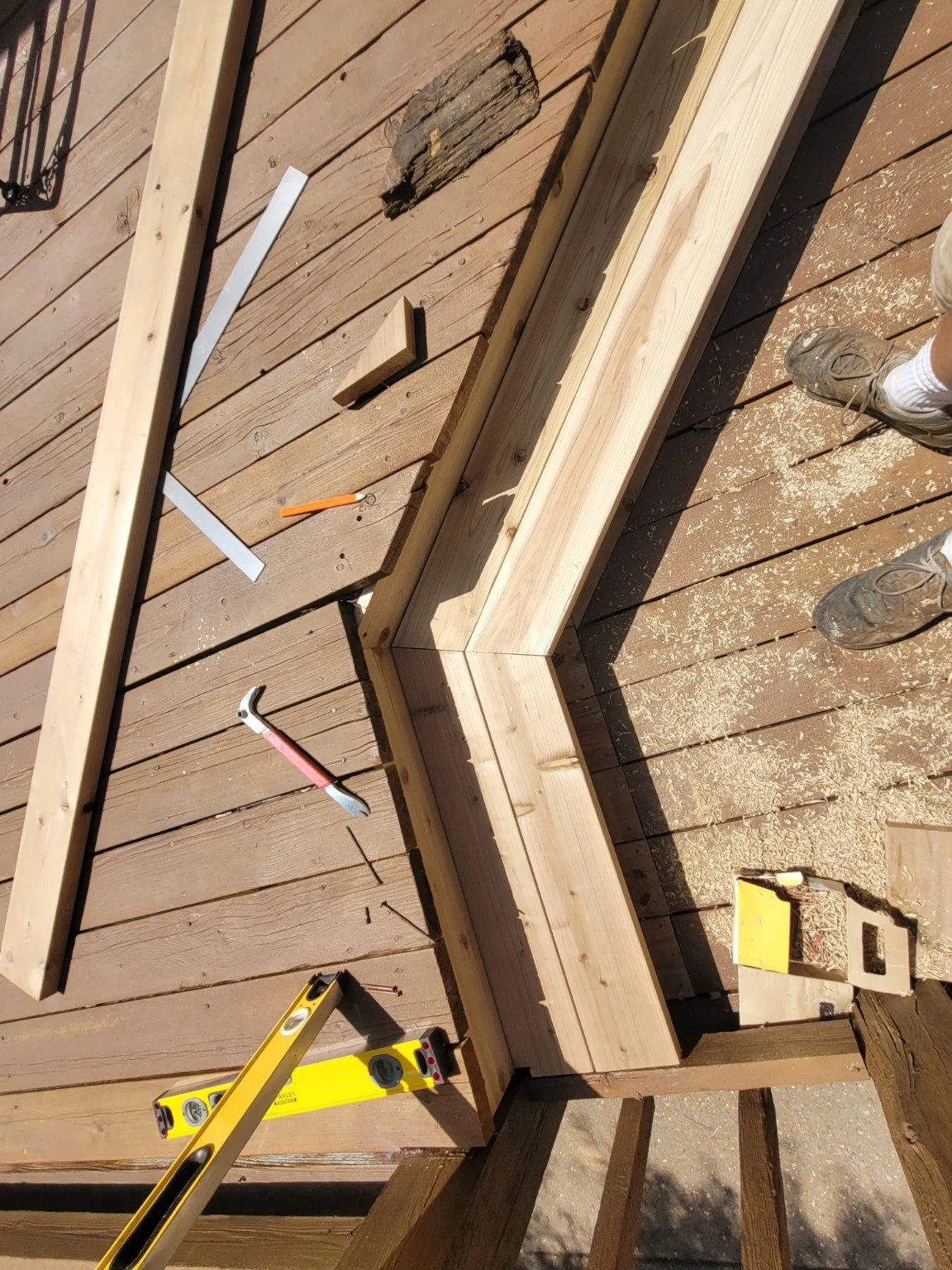
Restoration sometimes means more than cleaning and oil. Individual boards, steps, rails and structural components can be replaced when needed without turning a repairable deck into a complete rebuild.
And when a visible component has an existing architectural detail, the replacement should look like it belongs there.
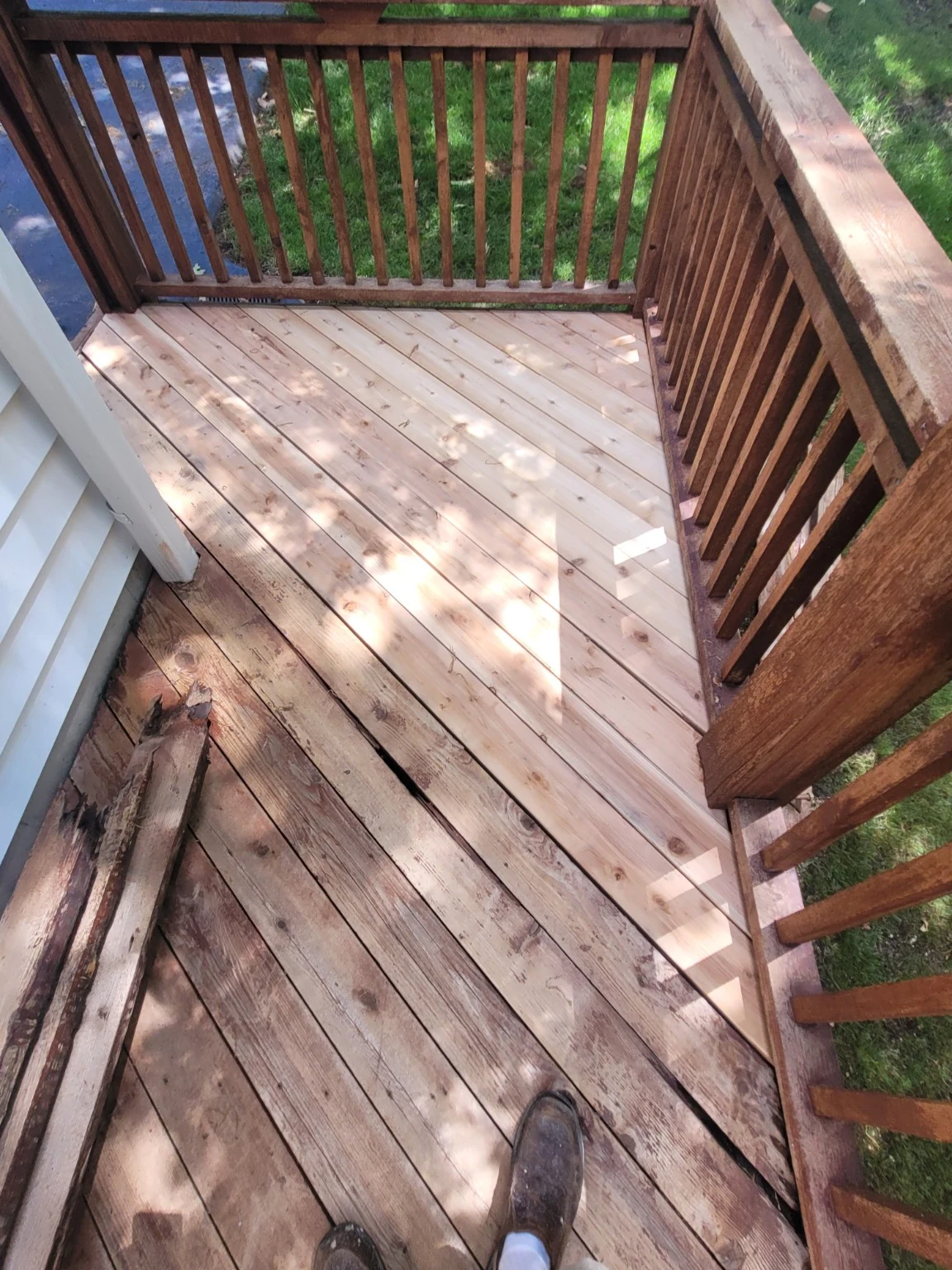
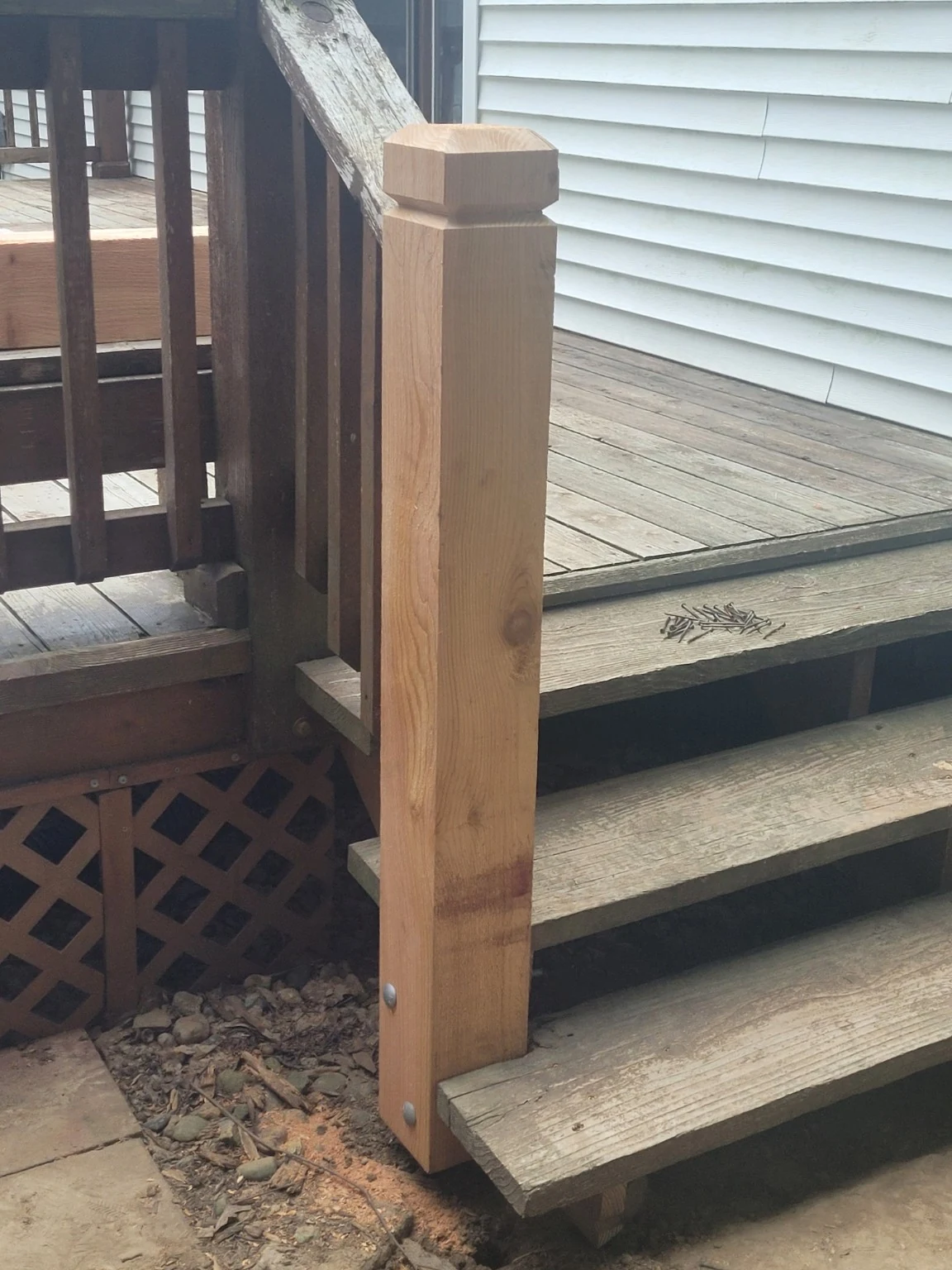
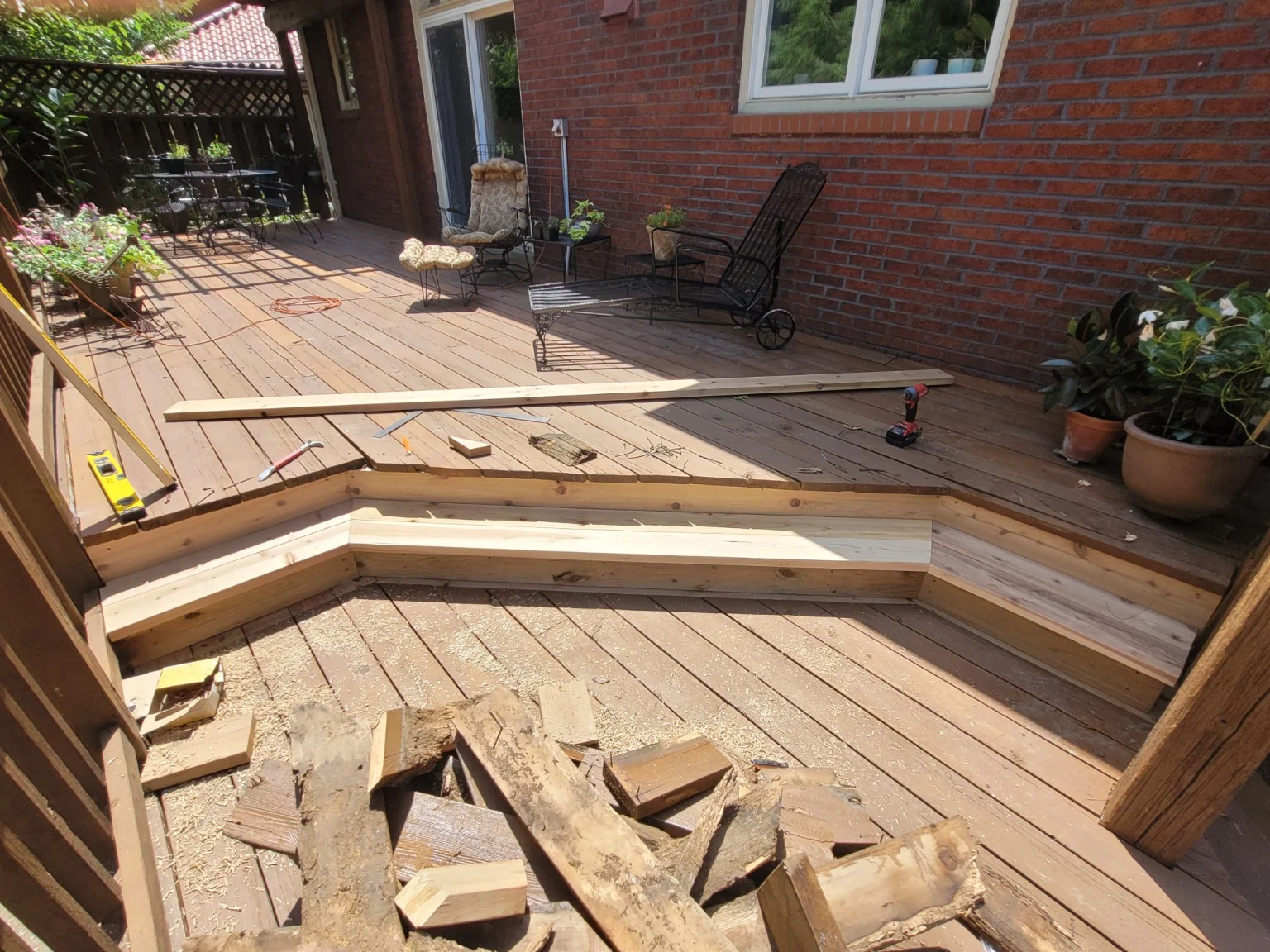
Rebuilding a wraparound step.
When a localized feature has reached the end of its life, rebuilding it properly can preserve the rest of the deck instead of replacing everything around it.
Start with the wood you already own.
Call or text Brett about cleaning, restoration, penetrating finishes or selective deck repairs in the St. Louis area.